TheAsanForum

Online ISSN 2288-5757 March - April 2026 Vol.14, No.2

Menu

Skip to content
  • Topics
    • National Security
    • Human Security
    • Regionalism
    • International Relations Theory
    • National Identity
    • Economic Relations
    • Others
  • Countries
    • South Korea
    • North Korea
    • USA
    • China
    • Japan
    • Russia
    • Others
  • Contributors
  • Journal
    • Special Forum
    • Open Forum
    • National Commentaries
    • Alternative Scenarios
    • Country Reports
  • Archive
  • About Us
    • Mission Statement
    • Editorial Board
    • Staff
    • Contact Us
    • Newsletter
Home > Countries > China

China

  • November – December, 2020
  • September – October, 2020
  • July – August, 2020
  • May – June, 2020
  • March – April, 2020
  • January – February, 2020
  • November – December, 2019
  • September – October, 2019
  • July – August, 2019
  • May – June, 2019
  • March – April, 2019
  • January – February, 2019
  • November – December, 2018
  • September – October, 2018
  • July – August, 2018
  • May – June, 2018
  • March – April, 2018
  • January – February, 2018
  • November – December, 2017
  • September – October, 2017
  • July – August, 2017
  • May – June, 2017
  • March – April, 2017
  • January – February, 2017
  • November – December, 2016
  • September – October, 2016
  • July – August, 2016
  • May – June, 2016
  • March-April, 2016
  • January – February, 2016
  • November – December, 2015
  • September – October, 2015
  • July – August, 2015
  • May – June, 2015
  • March – April, 2015
  • January – February, 2015
  • November – December, 2014
  • September – October, 2014
  • July – August, 2014
  • May – June, 2014
  • March – April, 2014
  • January – February, 2014
  • November – December, 2013
  • September-October, 2013
  • July-August, 2013
June 30,2016 Special Forum

Regional Security Architecture in the Asia-Pacific: What Role for the EU?

Ever since the financial crisis crept from the United States to Europe in 2008, we have observed change in the international system, in general, and in Asia, in particular, which, in turn, has global repercussions with the re-emergence of China. Change follows change, adding to complexity: while China’s role as the economic power house was the prevailing narrative, the slowing down ..

Michael Reiterer
CBM , CICA , EAS , EU-China Connectivity , Global Strategy , Hegemon , Multipolarity , Revisionist foreign policy , Rule of law
June 24,2016 Open Forum

The Pivot vs. the “Progressives”

For more than a decade the two most divisive issues in East Asia have been the gap over how to deal with: 1) the Sino-US relationship and which side is responsible for damaging it and endangering regional stability; and 2) North Korea’s nuclear weapons and missile threats and how best to resolve them. In recent commentaries we find misleading talk of both China’s limited aspiratio..

Gilbert Rozman
Asia for the Asians , China first , G2 , hegemonism , Kurt Campbell , Six-Party Talks , Sunshine Policy
June 22,2016 Open Forum

China and the Evolving World Order: A Stakeholder or a Revolutionary Power?

China’s rapid rise has raised the question if China is a stakeholder or a dissatisfied revolutionary power to advance its alternative visions. This article argues that although China is not a simple rule-taker content to preserve the existing order, it is not yet a revolutionary power discontent with and willing to undermine the existing order. Not only is China far from the position to..

Suisheng Zhao
AIIB , Bretton Woods , Institution-building , OBOR , Reformist , Revisionist , sovereignty , Tianxia
June 22,2016 Alternative Scenarios

Negative Scenario II: The Integration of China’s Northeast and Russia’s Far East in the Silk Road Economic Belt

Russia pursues a top-down, state-led policy formulated in Moscow to promote economic development of the Russian Far East and its economic relations with the Asia-Pacific. Can this policy be considered state-led industrialization with characteristics similar to Japanese, Chinese and South Korean models of state-led industrialization and export-led growth? Given Russia’s asymmetric econo..

Gaye Christoffersen
Access Meeting China-Russia , Asymmetric economic relations , Silk Road fever , State-led industrialization , Valdai Discussion Club
June 16,2016 National Commentaries

A View from the United States: Defending Camelot

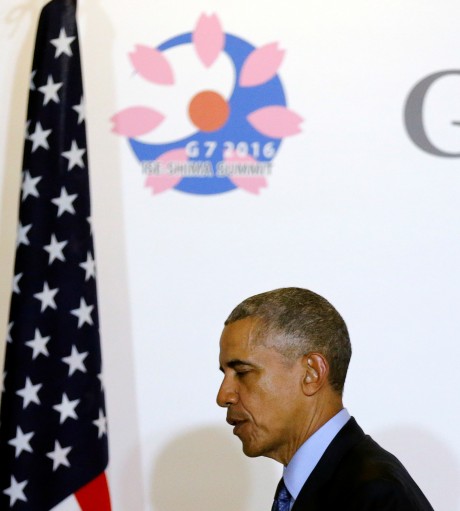
President Obama’s final G7 summit meeting occurred against the backdrop of a world in which the core values espoused by the G7—democracy, the free-market economy, and respect for international norms of security and human rights—are increasingly under stress. The very fact that this was a G7 rather than a G8 meeting underscored the recent setbacks in what had been a trend toward cons..

Frank Jannuzi
Brexit , Consensus-building , International norms , Musudan IRBM , TPP , UNCLOS Tribunal , US nuclear deterrence
June 10,2016 Alternative Scenarios

Positive Scenario II

In 2009 in New York, a vast program for cooperation between the regions of the Russian Far East and Eastern Siberia, on one side, and Northeast China, on the other, extending to 2018, was adopted by the leaders of Russia and China (Dmitri Medvedev and Hu Jintao). For the realization of this program, they were to carry out economic integration of these two border regions on a qualitatively new leve..

Ivan Zuenko
Agricultural cooperation , Free port Vladivostok , SREB EEU Convergence , Yellow Peril
June 03,2016 Alternative Scenarios

Negative Scenario I: The Integration of China’s Northeast and Russia’s Far East in the Silk Road Economic Belt

Beijing’s initiative, the Silk Road Economic Belt (SREB), is meant to contribute to China’s economic rise by creating markets for surplus production of such goods as steel and cement, putting Chinese companies to work building infrastructure, and integrating China’s economy with its periphery. It also was meant to develop comprehensive relations with countries along the SREB ..

Gaye Christoffersen
Dongbei-RFE integration , EEU , ESPO , Heilongjiang , SREB
June 03,2016 Open Forum

Chinese Interpretations of Japan and Its Role in the Indo-Pacific Region in 2016

In April, Kishida Fumio made the first official visit by a Japanese foreign minister to China in more than four years. Sino–Japanese relations had deteriorated over the Senkaku/Diaoyu Islands dispute in the early 2010s and have yet to recover. They overcame one hurdle when Xi Jinping agreed to meet Abe Shinzo during Abe’s visit for the November 2014 Beijing Asia-Pacific Economic Coope..

Danielle F. S. Cohen (assisted by Dong Jiaxin)
Article 9 , China threat theory , Expansionist history , India-Japan relations , Japanese Air Self-Defense Force , proactive pacifism , Quadrilateral initiative , South China Sea , UNCLOS
May 30,2016 Country Reports

Country Report: Russia (May 2016)

On April 12, Sergei Lavrov in Rossiiskaya Gazeta made clear Russian thinking about Mongolia, Japan, and China. His words for Mongolia spoke only of closeness: in history, today, and in three-sided cooperation with China, joining together the Eurasian Economic Union (EEU), the Silk Road Economic Belt (SREB), and the Steppe Road of Mongolia. For Japan, the message was much more guarded: about a ..

Editorial Staff (with the assistance of Olga Puzanova)
Authoritarian capitalism , EEU , Eurasianism , Pluralism , Sino-Russian Relations , SREB , Turn to Asia
May 26,2016 Alternative Scenarios

Positive Scenario I

At present, the level of regional cooperation between Russia and China clearly does not correspond to the level of relations between the leadership of the two countries, which is described as “the best relations in all of history.” In actuality, the observer would be stunned by the absence in cities of the Russian Far East of Chinatowns or Chinese factories. The scale of Chinese i..

Ivan Zuenko
Big building , informal economy , tourism
  • 41
  • 42
  • 43
  • 44
  • 45
  • 46
  • 47
  • 48
  • 49
  • 50

Archive

  • All
  • November – December, 2020
  • September – October, 2020
  • July – August, 2020
  • May – June, 2020
  • March – April, 2020
  • January – February, 2020
  • November – December, 2019
  • September – October, 2019
  • July – August, 2019
  • May – June, 2019
  • March – April, 2019
  • January – February, 2019
  • November – December, 2018
  • September – October, 2018
  • July – August, 2018
  • May – June, 2018
  • March – April, 2018
  • January – February, 2018
  • November – December, 2017
  • September – October, 2017
  • July – August, 2017
  • May – June, 2017
  • March – April, 2017
  • January – February, 2017
  • November – December, 2016
  • September – October, 2016
  • July – August, 2016
  • May – June, 2016
  • March-April, 2016
  • January – February, 2016
  • November – December, 2015
  • September – October, 2015
  • July – August, 2015
  • May – June, 2015
  • March – April, 2015
  • January – February, 2015
  • November – December, 2014
  • September – October, 2014
  • July – August, 2014
  • May – June, 2014
  • March – April, 2014
  • January – February, 2014
  • November – December, 2013
  • September-October, 2013
  • July-August, 2013

Contributor

  • Adam P. Liff
  • Admiral Dennis Blair
  • Akimoto Satohiro
  • Alexander Gabuev
  • Alexander Korolev
  • Alexander Lukin
  • Alexandre Y. Mansourov
  • Alexis Dudden
  • Alice Ekman
  • Alison Kaufman
  • Amanda Trea Phua
  • Amitav Acharya
  • Amy King
  • Andrew Erickson
  • Andrew Kuchins
  • Andrew O’Neil
  • Anna Kireeva
  • Anne-Marie Brady
  • Annie Kowalewski
  • Artyom Lukin
  • Asano Ryo*
  • Audrye Wong
  • Aurel Croissant
  • Austin Long
  • Balbina Y. Hwang
  • Benjamin Herscovitch
  • Benjamin L. Self
  • Bong Youngshik*
  • Brad Glosserman
  • Brantly Womack
  • Brendon Taylor
  • Brian G. Carlson
  • Brian Kim
  • Bruce Klingner
  • Catherine Jones
  • Céline Pajon
  • Charles Burton
  • Cheng Xiaohe*
  • Chiew-Ping Hoo
  • Choi Kang*
  • Choi YJ*
  • Chris Miller
  • Christopher Clary
  • Christopher R. Hughes
  • CHU Shulong
  • Chun Chaesung*
  • Chun Yungwoo*
  • Chung Jae Ho*
  • Claude Barfield
  • Constantino Xavier
  • D.V. Suslov
  • Dana Rice
  • Daniel Kliman
  • Daniel Twining
  • Danielle F. S. Cohen (assisted by Dong Jiaxin)
  • Darcie Draudt
  • Darren J. Lim
  • David Arase
  • David Asher
  • David Shambaugh
  • David Steinberg
  • David Zweig
  • Deepa M. Ollapally
  • Dmitri Trenin
  • Dmitry Streltsov
  • Do Thanh Hai*
  • Donald K. Emmerson
  • Dong Xiangrong
  • Editorial Staff
  • Emily de la Bruyere
  • Eric Heginbotham
  • Eric Li
  • Erik Mobrand
  • Eun A Jo
  • Evelyn Goh
  • Ezra Vogel
  • Felix K. Chang
  • Feng Shaolei
  • Feng Yujun*
  • François Godement
  • Frank Jannuzi
  • Fujiwara Kiichi*
  • Gary Samore
  • Gaye Christoffersen
  • General (Ret.) Walter L. Sharp
  • Georgy Toloraya
  • Gilbert Rozman
  • Glen S. Fukushima
  • Go Myong-hyun*
  • Gregory Shtraks
  • Guan Guihai
  • Hahm Chaibong*
  • Hakamada Shigeki
  • Han Minjeong*
  • Han Sukhee*
  • Han Sung-Joo*
  • Hanns W. Maull
  • Harry Harding
  • Hasan H. Karrar
  • Hong Kyudok*
  • Hong Sang Hwa
  • Hong Yi Kyung
  • Hosoya Yuichi*
  • Huang Jing*
  • Huong Le Thu
  • Hyodo Shinji*
  • Hyun Daesong*
  • Ian Hall
  • Ian Storey
  • Ithrana Lawrence
  • Ivan Zuenko
  • J. Berkshire Miller
  • Jacques deLisle
  • Jagannath Panda
  • James Clay Moltz
  • James D.J. Brown
  • James Przystup
  • James Walsh
  • Jeff Schubert
  • Jeffrey Mankoff
  • Jeffrey Reeves
  • Jennifer Lind
  • Jiang Tianjiao
  • Jin Linbo
  • Jina Kim
  • Jochen Prantl
  • Joel Wuthnow
  • John Fitzgerald
  • John Garnaut
  • John L. Thornton
  • John Nilsson-Wright
  • John W. Garver
  • Jonathan D. Pollack
  • Jonathan T. Chow
  • Joon-hyung Kim
  • Joshua P. Meltzer
  • Jude Blanchette
  • June Park
  • June Teufel Dreyer
  • Jürgen Haacke
  • Kathryn Botto
  • Katie Stallard-Blanchette
  • Kawashima Shin*
  • Kazuhiko Togo
  • Kendall-Taylor Andrea
  • Kerry Brown
  • Ketian Zhang
  • Kim Hankwon*
  • Kim Jaechun*
  • Kim Jiyoon*
  • Kim Jiyoung*
  • Kim Kimberly
  • Kim Seonkyung
  • Kim Sung-han*
  • Kim Taehwan*
  • Kimura Kan*
  • Kirk W. Larsen
  • Koizumi Yu
  • Koo Bon-hak*
  • Kristine Lee
  • Kuik Cheng-Chwee*
  • Kurata Toru*
  • Kuroyanagi Yoneji*
  • Larry A. Niksch
  • Laura Rosenberger
  • Lee Chung Min*
  • Lee Jang-wook*
  • Lee Myon-woo
  • Lee Sang-Hyun*
  • Lee Seong-hyon
  • Lee Shin-wha*
  • Leif-Eric Easley
  • Li Jingjie*
  • Li Xiaoyue*
  • Linda Jakobson
  • Liow Joseph Chinyong*
  • Lisa Collins
  • Louis Goodman
  • Lowell Dittmer
  • M.J. Chung
  • Malcolm Cook
  • Manish Tewari
  • Manpreet S. Anand
  • Marcin Kaczmarski
  • Maria Repnikova
  • Mark Manyin
  • Mark Minton
  • Mark Tokola
  • Marlen Belgibayev
  • Marlene Laruelle
  • Matsuda Takuya*
  • Mendee Jargalsaikhan
  • Michael Auslin
  • Michael Clarke
  • Michael J. Green
  • Michael J. Mazarr
  • Michael Kugelman
  • Michael Reiterer
  • Michishita Narushige*
  • Michito Tsuruoka
  • Mikhail Alexseev
  • Min Ye
  • Ming Wan
  • Minxin Pei
  • Miyagi Taizo
  • Munkyoung Shin
  • Muthiah Alagappa
  • Nadège Rolland
  • Nagao Satoru*
  • Nakanishi Hiroshi*
  • Nakano Koichi*
  • Natalie Sambhi
  • Nele Noesselt
  • Ngo Di Lan
  • Oh Joon*
  • Olga Puzanova
  • Olivia Cheung
  • Omae Hitoshi*
  • P.A. Minakir
  • Park Cheol Hee*
  • Patricia M. Kim
  • Paul Heer
  • Paul Schwartz
  • Peter Mattis
  • Peter van der Hoest
  • Peter van der Hoest
  • Prashanth Parameswaran
  • Ra Mason
  • Rachel Minyoung Lee
  • Rahul Mishra
  • Ralf Emmers
  • Randall Schriver
  • Ren Xiao*
  • Rex Li
  • Richard Samuels
  • Richard Weitz
  • Ristian Atriandi Supriyanto
  • Robert J. Einhorn
  • Robert Kelly
  • Robert L. Gallucci
  • Robert Sutter
  • Rory Medcalf
  • Ryan Hass
  • Sanghwa Hong
  • Satu Limaye
  • Scott Bentley
  • Scott Snyder
  • Scott W. Harold
  • Sean R. Roberts
  • Sebastien Peyrouse
  • See-Won Byun
  • Seol In-hyo*
  • Sergey Radchenko
  • Serghei Golunov
  • Seyoon Jung
  • Sharon Yoon
  • Sheila A. Smith
  • Shelley Rigger
  • Shihoko Goto
  • Shin Beomchul*
  • Shin Bong-kil*
  • Shin Gi-Wook*
  • Shruti Pandalai
  • Soeya Yoshihide*
  • Sophie Lemiere
  • Stephen Blank
  • Stephen D. Krasner
  • Stephen Nagy
  • Steve Tsang
  • Steven Denney
  • Sue Mi Terry
  • Suisheng Zhao
  • Sungil Kwak
  • Swaran Singh
  • Swati Chawla
  • Syaru Shirley Lin
  • Tadashi Anno
  • Takahara Akio*
  • Takenaka Chiharu*
  • Tanaka Akihiko*
  • Tanaka Hitoshi*
  • Tanvi Madan
  • Tatsumi Yuki*
  • Teng Jianqun*
  • Terada Takashi*
  • Terence Roehrig
  • Tessa Morris-Suzuki
  • Theresa Fallon
  • Thomas F. Lynch III
  • Thomas Hubbard
  • Timur Dadabaev
  • Titli Basu
  • Tom Miller
  • Valerie Niquet
  • Van Jackson
  • Vasily Kashin
  • Vincent Wei-cheng Wang
  • Vitaly Kozyrev
  • Vu Truong-Minh*
  • Wang Dong*
  • Wang Jisi*
  • Wang Yizhou*
  • William A. Callahan
  • William B. Brown
  • William H. Overholt
  • William W. Grimes
  • Woo Jung-Yeop*
  • Yamaguchi Noboru*
  • Yinan He
  • Yoko Hirose
  • Yumi Ko
  • Yun Sun
  • Yusuke Ishihara
  • Zack Cooper
  • Zhang Jiawei
  • Zhang Xiaotong*
  • Zhao Huasheng*
  • Zheng Wang*
  • Zhu Feng*

Latest

  • Country Report: South Korea (May 2021)
    Munkyoung Shin
  • Washington Insights, Vol. 9, No. 2
    Editorial Staff
  • Country Report: Japan (April 2021)
    Editorial Staff

Tags

the China cardbonanzaUS-Japan RelationsMarch 1 MovementGCTF
the asan institute for policy studies asan academy RSS

© Copyright The Asan Forum Limited 2013. All Rights Reserved.

  • The Asan Institute for Policy Studies
  • Asan Academy
  • Asan China Forum
  • Asan Plenum
  • Asan Nuclear Forum
  • Asan Washington Forum